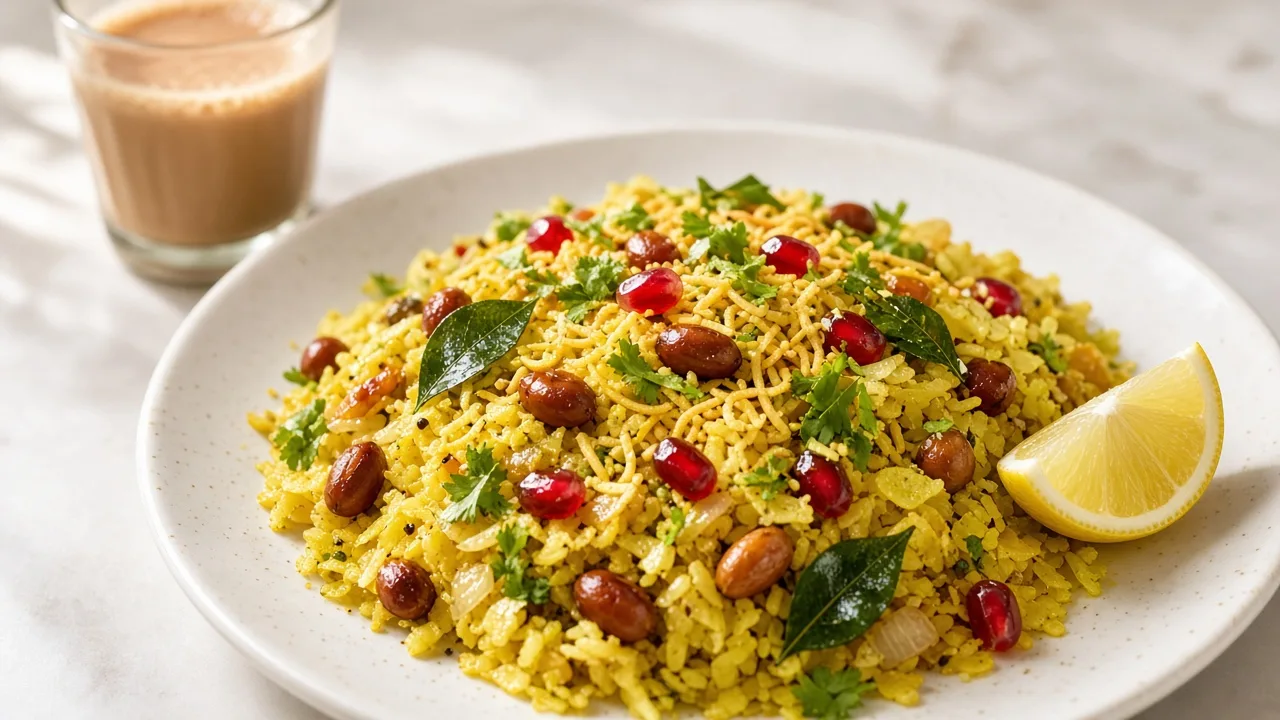
Ask anyone from Maharashtra about their favourite breakfast and kanda poha will almost certainly come up. Light, fluffy flattened rice tempered with mustard seeds, curry leaves, onions and peanuts, finished with a squeeze of lemon, it is comforting, quick and inexpensive. It is a weekday staple in homes across India and pairs perfectly with a cup of hot chai.
Why you will love it
- Quick: Ready in about 20 minutes.
- Light: Easy on the stomach, yet filling.
- Budget-friendly: Made with simple pantry ingredients.
- Customisable: Add vegetables, sprouts or peas to make it more nourishing.
Serves and timing
- Serves: 2 to 3
- Preparation time: 10 minutes
- Cooking time: 10 minutes
Ingredients
- 2 cups thick poha (flattened rice)
- 2 tablespoons oil
- 1/4 cup raw peanuts
- 1 teaspoon mustard seeds
- 1/2 teaspoon cumin seeds
- 10 to 12 curry leaves
- 1 to 2 green chillies, finely chopped
- 1 large onion, finely chopped
- 1 small potato, finely diced (optional)
- 1/4 teaspoon turmeric powder
- 1 teaspoon sugar
- Salt to taste
- 1 tablespoon lemon juice
- 2 tablespoons chopped coriander
- Fresh grated coconut, sev and pomegranate seeds to garnish (optional)
Steps
- Rinse the poha: Place the poha in a sieve and rinse it under running water for about 15 to 20 seconds, gently moving it with your fingers. Do not soak it in a bowl of water, or it will turn mushy.
- Season and rest: Drain well. Sprinkle the sugar, salt and turmeric over the damp poha, mix lightly with a fork and set aside for 5 to 10 minutes. It will soften and turn fluffy.
- Roast the peanuts: Heat oil in a kadai and fry the peanuts on medium heat until they turn crunchy and golden. Remove and keep aside.
- Temper: In the same oil, add mustard seeds. When they splutter, add cumin seeds, curry leaves and green chillies. Fry for a few seconds.
- Cook the onions: Add the chopped onions and saute until soft and translucent. Do not brown them too much.
- Cook the potato: If using potato, add it now, cover and cook on low heat for 5 to 6 minutes until tender, stirring once or twice.
- Add the poha: Loosen the poha with your fingers to break any lumps, then add it to the pan. Mix gently to combine everything evenly.
- Steam: Cover and cook on low heat for 2 to 3 minutes so the poha heats through and absorbs the flavours.
- Finish: Turn off the heat. Add the roasted peanuts, lemon juice and coriander, and toss gently.
- Garnish and serve: Top with grated coconut, sev and pomegranate seeds if you like. Serve hot.
Tips for perfect poha
- Use thick poha. Thin poha is better suited for chivda and turns soggy easily.
- Rinse, do not soak. A quick rinse is all it needs.
- Test the texture. The rinsed poha should be soft enough to press between your fingers but still hold its shape.
- Add lemon at the end, off the heat, to keep its fresh flavour.
- Balance the flavours. The small amount of sugar balances the lemon and chilli; adjust to taste.
Variations
- Batata poha: Increase the potatoes and skip the onion for a simple version.
- Vegetable poha: Add peas, carrots and capsicum for extra nutrition.
- Indori poha: Steam the poha, then top with jeeravan masala, sev and onions.
- Sprouts poha: Mix in steamed moong sprouts for added protein.
Serving ideas
Serve poha with a hot cup of chai or filter coffee. For a more filling breakfast, add a bowl of curd or a fruit on the side. It also works well as a light evening snack.
Storage
Poha tastes best fresh. If you have leftovers, refrigerate for up to a day and sprinkle a little water before reheating.