If your social feeds have been full of people bravely tackling bright-red noodles and sweating through spicy chicken, you've already met buldak. Now the food forecasters are taking it seriously too. In its 2027 Trends Report, released on 7 October 2026, food and beverage intelligence firm Datassential named buldak among the foods and flavours to know for 2027 and beyond. It describes buldak as "Korean spicy chicken in a gochujang and chile sauce".
Here's a quick look at why buldak is catching on, followed by a home-friendly recipe you can make as fiery or as gentle as you like.
What is buldak?
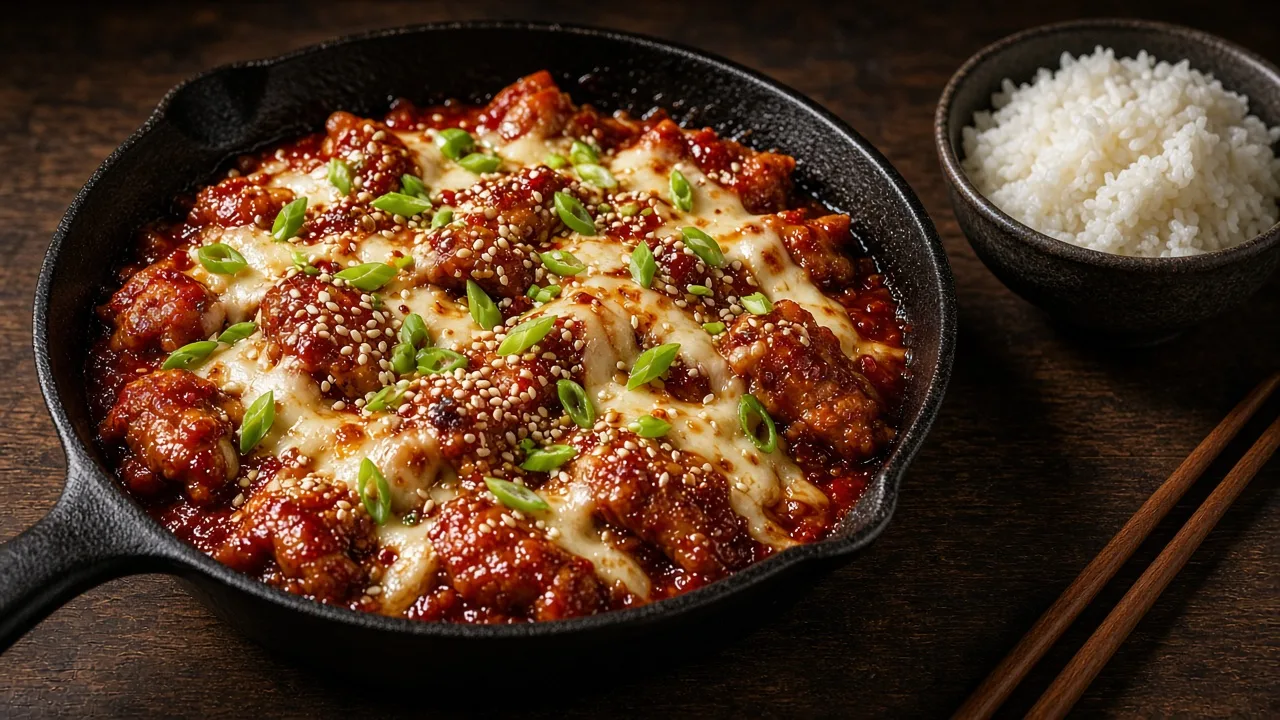
The name translates roughly as "fire chicken", from the Korean bul (fire) and dak (chicken). The dish is known for intense heat balanced with sweetness and savoury depth, usually from gochujang (fermented red chilli paste), gochugaru (Korean chilli flakes), garlic and something sweet such as honey or sugar. It's often finished with melted cheese, which tempers the heat and adds a satisfying stretch.
Why it's trending
- Spicy challenges online have introduced the flavour to a global audience.
- Korean food's popularity keeps growing worldwide, from fried chicken to kimchi to gochujang everything.
- Bold, fermented flavours are having a moment. Datassential's list also includes doubanjiang, a Sichuan fermented bean and chilli paste, while chilli crisp has graduated to its "New Classics" list.
Datassential found that 75% of consumers say they're looking forward to new food and beverage trends in 2027.
Buldak-style gochujang chicken
Serves: 3–4 | Prep: 15 minutes | Cook: 20 minutes
For the chicken
- 600 g boneless chicken thighs, cut into bite-sized pieces
- 1 tbsp soy sauce
- 1 tsp grated fresh ginger
- Pinch of black pepper
- 1 tbsp neutral oil, such as sunflower or rapeseed
For the fire sauce
- 3 tbsp gochujang
- 1–3 tbsp gochugaru (use 1 for medium, 3 for serious heat)
- 2 tbsp soy sauce
- 2 tbsp honey or brown sugar
- 1 tbsp rice vinegar
- 1 tbsp sesame oil
- 5 garlic cloves, finely grated
- 3 tbsp water
To finish
- 100–150 g grated mozzarella (optional but traditional in many versions)
- 2 spring onions, finely sliced
- 1 tbsp toasted sesame seeds
- Steamed rice, to serve
Method
- Marinate the chicken. Toss the chicken with the soy sauce, ginger and pepper. Leave for 10 minutes while you make the sauce.
- Mix the sauce. Stir together the gochujang, gochugaru, soy sauce, honey, vinegar, sesame oil, garlic and water until smooth. Taste: add more honey if it's too fierce, more gochugaru if you want more fire.
- Sear the chicken. Heat the oil in a large ovenproof frying pan or cast-iron skillet over medium-high heat. Add the chicken in a single layer and cook for 5–6 minutes, turning, until golden on most sides.
- Add the sauce. Lower the heat to medium. Pour in the sauce and stir to coat. Simmer for 6–8 minutes, stirring often, until the chicken is cooked through and the sauce is thick, glossy and sticky. Add a splash of water if it catches.
- Add the cheese. Scatter mozzarella over the top. Cover with a lid for 2–3 minutes until melted, or place the pan under a hot grill for a minute or two until bubbling and lightly browned.
- Finish and serve. Sprinkle with spring onions and sesame seeds. Serve straight from the pan with rice.
Tips for success
- Use thighs, not breasts. Thigh meat stays juicy through the sticky simmer.
- Control the heat. Gochujang brands vary in spiciness. Start low with gochugaru and build up.
- Watch the sugar. Honey and gochujang can burn, so keep the heat moderate once the sauce goes in.
- Cool it down. Serve with cucumber slices, pickled radish or a glass of milk to soothe the heat.
Variations
- Buldak noodles: Toss the sauce with cooked wheat noodles and a little noodle water, then top with a fried egg.
- Vegetarian: Swap the chicken for firm tofu (pressed and cubed) or king oyster mushrooms.
- Buldak wings: Bake or air-fry wings until crisp, then toss in the warmed sauce.
- Rice bowl: Serve over rice with kimchi, a soft-boiled egg and shredded lettuce.
Stocking your pantry for Korean flavours
Once you have a few staples in the cupboard, buldak and many other Korean dishes become quick weeknight options. Look for these in Asian supermarkets or the international aisle of larger grocery stores:
- Gochujang: a thick, sweet-savoury fermented chilli paste. Once opened, keep it in the fridge, where it lasts for months.
- Gochugaru: vivid red chilli flakes with a fruity, slightly smoky heat. Store in an airtight jar away from light.
- Toasted sesame oil: used in small amounts for its nutty aroma rather than for frying.
- Rice vinegar: mild and gently sweet, good for balancing rich sauces.
With these on hand, you can also make dipping sauces, quick noodle dishes and glazes for vegetables or tofu.
What to serve alongside
Because buldak is so intense, it pairs best with cooling, simple sides. Try plain steamed rice, a crunchy cucumber salad dressed with rice vinegar and a pinch of sugar, lightly blanched greens with sesame, or a soft omelette. A bowl of kimchi adds tang, though it brings its own heat.
Storing and reheating
Keep leftovers in an airtight container in the fridge for up to three days. Reheat gently in a pan with a splash of water until piping hot all the way through. The sauce also keeps well on its own for about a week in the fridge and is great on roasted vegetables.
The takeaway
Buldak is fiery, sweet, savoury and deeply satisfying, so it's easy to see why forecasters expect it to keep spreading. Making it at home lets you set the heat to suit your table, from family-friendly warmth to a full fire-chicken challenge.