Cold weather does not break a car outright; it simply exposes whatever was already marginal. A battery that was weak in September fails in December. A wiper blade that was streaking in autumn turns a light drizzle into a visibility problem once the sun sets earlier. A short, deliberate pre-winter check costs an afternoon and avoids most of the roadside calls that spike every year once temperatures fall.
Why Cold Weather Is Harder on a Car
Cold air is denser, engine oil thickens, rubber stiffens, and chemical reactions inside a battery slow down right when the engine needs the most cranking power to start. None of this is dramatic on its own, but together these small effects compound. A car that starts and drives fine at moderate temperatures can struggle noticeably once the mercury drops, which is why most winter problems feel sudden even though the underlying wear was gradual.
Battery and Charging System
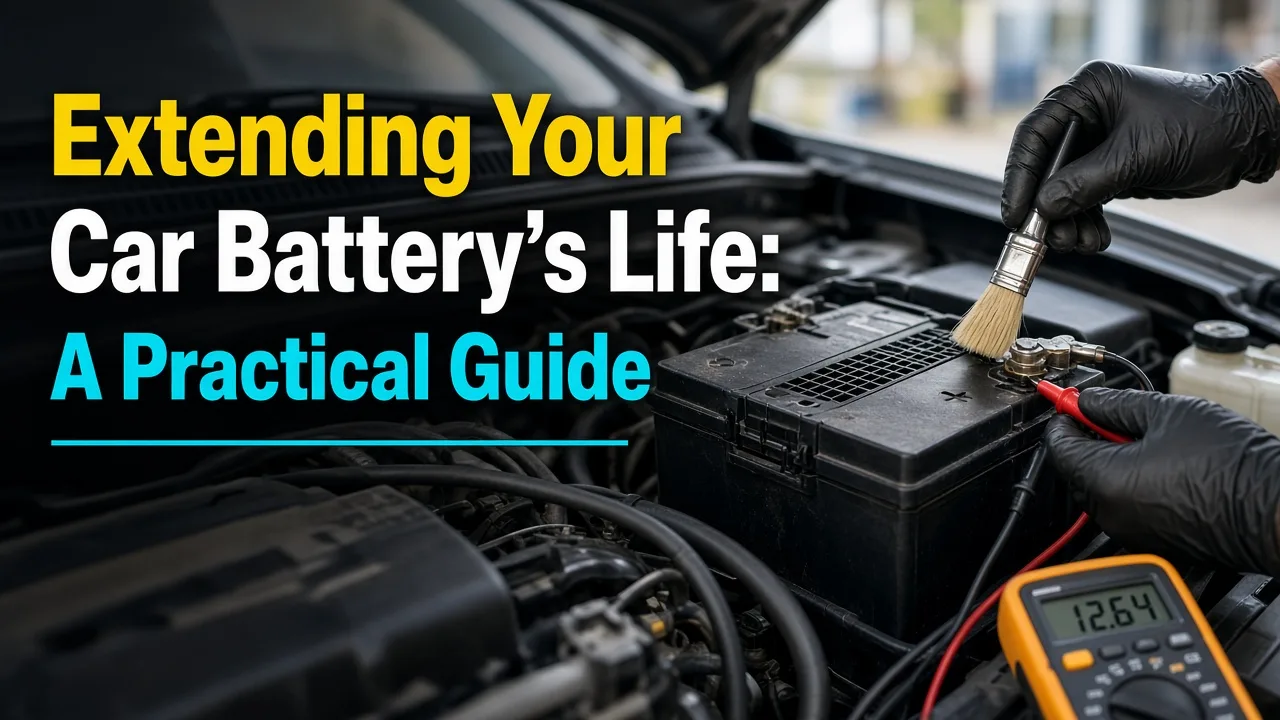
A car battery loses a meaningful share of its effective cranking power as temperatures fall, while the engine simultaneously needs more of that power to turn over cold, thickened oil. A battery that is already a few years old or has been showing slow starts in warm weather is the single most common reason for a no-start call once winter arrives.
- Have the battery load-tested rather than just voltage-checked; a battery can show a normal resting voltage and still fail under load.
- Check that terminals are clean and tight, with no white or greenish corrosion buildup.
- Inspect the alternator belt for cracking or glazing, since a weak charging system compounds a weak battery.
Tyres and Traction
Tyre pressure drops as ambient temperature falls, typically losing a small amount of pressure for every significant drop in temperature. Underinflated tyres handle worse, wear unevenly, and reduce traction exactly when roads are more likely to be wet or icy. Tread depth matters even more in winter, since a worn tyre has less margin to channel water and maintain grip on cold, slick surfaces.
- Check and adjust tyre pressure to the manufacturer's recommended cold-tyre value, not the warm, post-drive reading.
- Measure tread depth at several points across each tyre, since wear is often uneven.
- In regions with genuine snow and ice, dedicated winter tyres outperform all-season tyres by a wide margin below a certain temperature threshold, regardless of tread pattern.
Fluids, Filters, and Visibility
Engine oil, coolant, and washer fluid all behave differently in cold weather, and each has a winter-relevant failure mode worth checking before the season starts.
| Fluid or Part | Cold-Weather Risk | What to Check |
|---|---|---|
| Engine oil | Thickens, slows cranking and lubrication at startup | Correct viscosity grade for winter temperatures |
| Coolant | Can freeze and crack the engine block if too diluted | Correct water-to-coolant ratio for expected lows |
| Washer fluid | Plain water freezes and splits the reservoir | Winter-rated washer fluid, not water |
| Wiper blades | Stiffen and streak, reducing visibility in rain or sleet | Replace if streaking or chattering |
Lighting and an Emergency Kit
Shorter days mean more driving in low light, so this is a reasonable time to check that every bulb works, headlights are aimed correctly, and lenses are not so clouded that they scatter light instead of projecting it. It is also worth keeping a small kit in the car through the cold months: a torch, a basic first-aid kit, a blanket, a tyre pressure gauge, and a portable jump-start pack or cables.
Most winter breakdowns are not sudden failures. They are summer problems that finally ran out of room to hide.
Wrap-Up Checklist
- Load-test the battery and clean the terminals.
- Check tyre pressure and tread depth; consider winter tyres where genuinely cold or snowy.
- Switch to the correct winter oil viscosity and verify the coolant mixture.
- Replace washer fluid with a winter-rated version and inspect wiper blades.
- Check all lights and pack a basic emergency kit.