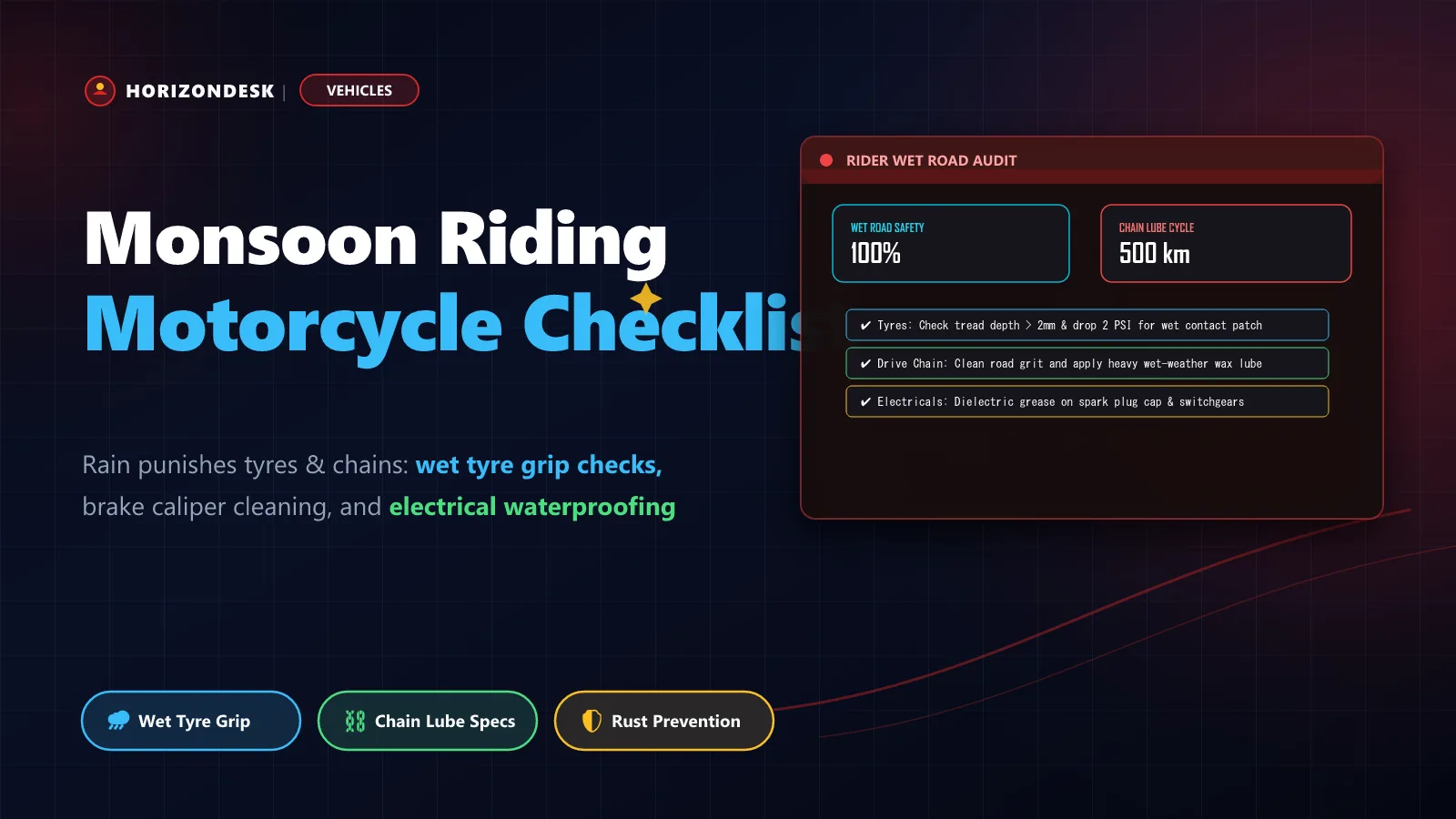
The first heavy rain of the monsoon is when you find out how well you've looked after your motorcycle. Worn tyres suddenly feel like they're on ice, brakes take longer to bite, the chain starts to squeak and the bike that started perfectly all summer coughs in the morning. A couple of hours of preparation, plus a few minutes each week, makes riding through the rainy months far safer and keeps repair bills down.
Tyres and brakes: your grip on wet roads
Tyres
Tread grooves exist to channel water away from the contact patch. As they wear, the tyre can ride up on a film of water and lose grip. Check the tread wear indicators — small raised bars inside the grooves — and replace the tyre before the tread reaches them. If you were planning a new tyre in a few months, fit it before the rains instead.
Check pressures weekly with a gauge, when the tyres are cold, and set them to the figures in your owner's manual. Underinflated tyres squirm and overinflated tyres reduce the contact patch; neither helps in the wet. Look for cracks in the sidewalls on older tyres, too.
Brakes
- Inspect pad thickness on disc brakes and replace pads that are close to their wear limit.
- Check the brake fluid level and colour. Fluid absorbs moisture over time, and dark fluid is due for a change.
- On drum brakes, expect reduced braking after riding through deep water. Apply the brakes gently a few times afterwards to dry them out.
Chain, electrics and battery
The chain
Rain washes lubricant off the chain and grit onto it, which accelerates wear on the chain and sprockets. Clean and lubricate the chain more often during the monsoon — roughly every 300–500 km, and after any long ride in heavy rain. Check slack as well; a chain that's too loose can jump the sprocket, and one too tight strains the bearings.
Electrical connections
Water finds its way into connectors and switches, causing flickering lights, a dead horn or starting trouble. Before the season, inspect visible connectors for corrosion and apply dielectric grease to exposed terminals. Check that the headlight, tail light, brake light, indicators and horn all work — being seen matters more than ever in heavy rain.
The battery
Clean any white or green corrosion from the terminals, make sure the connections are tight, and if the battery is more than three or four years old, have it tested. Cold, damp mornings expose weak batteries quickly.
In the rain, a well-maintained bike won't make you invincible. A neglected one will find every weakness on the road.
Keep water and rust out
- Air filter: a clogged or damp filter hurts performance. Check it before the season and after riding through waterlogged roads.
- Exhaust: avoid riding through water deep enough to reach the exhaust outlet, and don't stop with the outlet submerged.
- Paint and chrome: a coat of wax before the monsoon helps water bead off. Rinse off mud and road grime regularly rather than letting it sit.
- Covers: let the bike dry before covering it, and use a breathable cover. A plastic sheet over a wet bike traps moisture and speeds up rust.
Your monsoon checklist
| Item | Before the monsoon | During the monsoon |
|---|---|---|
| Tyre tread and condition | Inspect, replace if worn | Check weekly |
| Tyre pressure | Set to manual spec | Check weekly, when cold |
| Brake pads and fluid | Inspect, replace as needed | Check monthly |
| Chain | Clean, lubricate, adjust | Every 300–500 km or after heavy rain |
| Lights and horn | Test all, fix faults | Quick check before each ride |
| Battery and connectors | Clean, grease, test | Check monthly |
| Air filter | Inspect or replace | After riding through flooded roads |
Ride for the conditions
Maintenance only works alongside sensible riding. Increase your following distance, brake earlier and more smoothly, and avoid painted road markings, metal manhole covers and oily patches near traffic signals, which are especially slippery when wet. Wear proper rain gear with reflective elements, and keep your visor clean or treated so it doesn't fog. Look after the bike, ride a little slower, and the monsoon becomes a season to enjoy rather than endure.