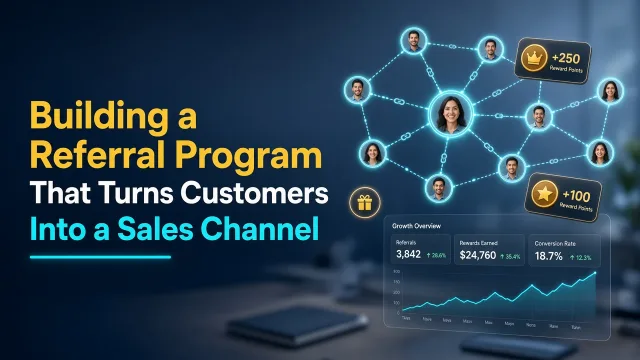
Referrals are often treated as a happy accident rather than a channel to design. A customer mentions the product to a colleague, a new signup shows up, and nobody quite knows why. That is a missed opportunity, because referred customers tend to arrive with more trust and less convincing needed than a lead from a cold channel. The challenge is that most formal referral programs underperform, not because referrals do not work, but because the program around them is built poorly.
Why Referrals Outperform Most Acquisition Channels
A referral carries social proof that an advertisement cannot. When someone a potential customer already trusts recommends a product, much of the skepticism that normally slows a sale disappears. Referred customers also arrive pre-qualified in a way cold leads do not: the person referring them usually has a rough sense of who the product is for, so the match tends to be better from the start.
None of this happens automatically. A program has to make referring easy, give people a reason to do it, and ask at a moment when the customer actually feels good about the product.
The Three Ingredients of a Referral Program That Works
A working referral program needs three things in place at once:
- A clear trigger moment. The ask should happen right after a customer experiences success, not during onboarding before they have formed an opinion.
- A frictionless mechanism. A unique link, a simple form, or an email template the customer can forward. Anything that requires the customer to explain the product themselves reduces participation.
- An incentive worth acting on. It does not need to be large, but it needs to feel proportionate to the effort of referring someone.
Miss any one of these and the program will technically exist without actually producing referrals.
Choosing the Right Incentive
There is no single correct incentive structure, but the options behave differently depending on the business:
| Incentive Type | Best Fit | Watch Out For |
|---|---|---|
| Cash reward | High-ticket B2B or services | Can feel transactional for consumer brands |
| Account credit (double-sided) | Subscription and SaaS products | Only motivating if the credit meaningfully offsets cost |
| Free upgrade or feature unlock | Products with a clear premium tier | Weak if upgrade has little perceived value |
| Non-monetary recognition | Community-driven or mission-led brands | Does not scale well for pure growth goals |
Double-sided incentives, where both the referrer and the new customer get something, tend to perform well because they remove the awkwardness of asking a favor. The new customer is also getting a deal, not just doing someone else a solid.
When to Launch a Referral Program (and When Not To)
A referral program amplifies what is already true about a product. If customers are not yet satisfied, a referral program will mostly sit unused, or worse, invite people to refer a product they are lukewarm about. Before investing in referral mechanics, it is worth confirming that existing customers are genuinely happy, ideally through direct conversations rather than guesswork.
Once that baseline exists, a referral program is well suited to businesses where the product has a visible result a referrer can point to, where customers naturally talk to similar prospects, and where the company has the operational capacity to pay out or honor incentives promptly.
Measuring Whether It Is Working
Track participation rate, not just total referrals. A program that generates ten referrals from ten thousand customers is probably broken somewhere in the mechanism or the incentive, even if those ten referrals converted well. Useful numbers to watch include:
- Percentage of eligible customers who have ever made a referral
- Conversion rate of referred leads compared to other channels
- Time from referral to first use by the new customer
A referral program is not a marketing tactic bolted onto the product. It is a reflection of whether the product is good enough that people want to vouch for it.
Next Steps
Start small: pick one trigger moment, one simple sharing mechanism, and one incentive, and run it with a limited group of customers before rolling it out widely. Watch participation rate first, refine the ask and the timing, and only then invest in automation or a dedicated referral platform.